National Dish Uganda: Samosa (Recipe)
In this article
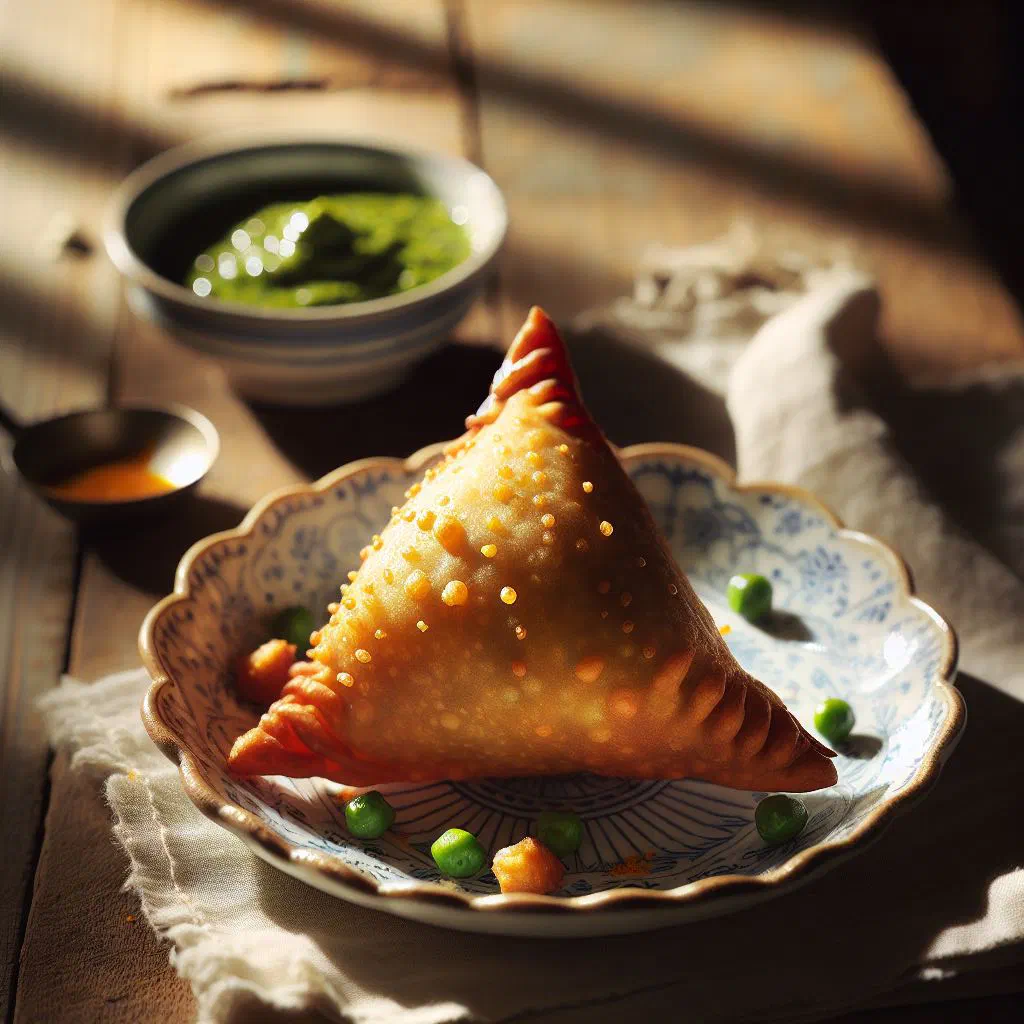
Crisp, golden and packed with flavour, the Samosa is one of Uganda’s best-loved snacks. You will find these little triangular parcels everywhere, sold from roadside stalls in Kampala, handed round at family celebrations, or piled high as party food. The pastry shatters when you bite into it, giving way to a warmly spiced filling of meat or vegetables. Best of all, they are far easier to make at home than their neat, professional-looking shape suggests.
About Samosa
Samosas are a genuine highlight of Ugandan cooking, and their popularity stretches well beyond Uganda into much of Africa and further afield. These crisp pastry parcels are filled with everything from hearty vegetables to well-seasoned meat, which is exactly what makes them so useful. They work as party food, as finger food, or even as a main course with a few sides. Between the savoury filling and the crunch of the fried pastry, samosas win over just about everyone who tries them, and they sit comfortably alongside street-food staples such as the Rolex.
Ingredients (serves 1–2)
- 250 g plain wheat flour
- 125 ml water
- 1 teaspoon salt
- ½ teaspoon curry powder
- 150 g minced meat or mixed vegetables
- 1 onion, diced
- 2 cloves of garlic, chopped
- Oil for deep-frying
Shopping for the ingredients
Before you start on the samosas, it is worth gathering everything on the list. Most supermarkets stock the basics you need without any trouble. For fresh items such as vegetables and herbs, a trip to a local market usually pays off, the produce tends to be fresher and better value. Check your spice rack too, as the curry powder is what gives these samosas their characteristic warmth.
Preparing the dish
Making samosas takes a bit of time and patience, but the process itself is straightforward. Start with the dough and let it rest so it becomes elastic and easier to shape. While it rests, get on with the filling: fry off the meat or vegetables and season them well. Take care to brown the onions and garlic properly before you combine everything, as that browning is where much of the depth of flavour comes from.
Step-by-step instructions
- Make the dough: Mix the flour, salt and water in a bowl and knead to a smooth, pliable dough. Wrap it in cling film and leave it to rest for 30 minutes.
- Prepare the filling: Heat oil in a pan, fry the onions and garlic, add the meat or vegetables and season with curry powder. Stir well and cook everything for about ten minutes.
- Shape the parcels: Divide the dough into small portions, roll them out and place a spoonful of filling on each round. Press the edges together firmly so the filling is properly sealed.
- Deep-fry: Heat plenty of oil in a deep pan. Lower the samosas into the hot oil and fry until golden brown. Drain on kitchen paper and serve.
Gluten-free / lactose-free version
People with intolerances can still enjoy these samosas. Replace the wheat flour with a gluten-free flour blend suited to pastry, which handles well once rested. For the filling, avoid anything containing dairy and reach for plant-based alternatives instead. It is worth checking the frying oil as well, to be sure it is free of additives that might cause problems.
Tips for vegans and vegetarians
For vegan and vegetarian versions of the samosa, the filling is entirely yours to design. Potatoes, peas, carrots and spinach are all excellent choices and combine well with one another. Season generously with spices such as cumin or paprika to keep the flavour lively. Tofu or aubergine will make the filling more substantial and add variety, much in the spirit of a Vegetable Curry.
More tips and tricks
A little forward planning makes samosas far less daunting. Prepare the filling the day before and leave it in the fridge overnight so the flavours have time to settle and deepen. The dough can also be made in advance and stored, well wrapped, in the fridge. Do not keep the finished samosas too long, though. They are at their very best eaten fresh from the pan.
Adapting the recipe to your taste
Samosas are endlessly adaptable and lend themselves to personal touches. Experiment with different fillings by using seasonal vegetables or whichever protein you prefer. The spicing is just as flexible: add chilli if you like real heat, or keep things gentle if you would rather a milder version. Let your imagination run and create a samosa that is entirely your own.
Ingredient substitutions
If you do not have everything to hand, there are plenty of workable alternatives. Chopped mushrooms or lentils stand in nicely for minced meat and keep the filling high in protein, the same trick that works in Pasted Beans. Frozen vegetables are a perfectly good substitute when fresh ones are hard to come by, and they are often part-cooked already. Just make sure your spices are fresh, as tired ones will flatten the whole dish.
Drink pairing ideas
Plenty of drinks suit these samosas. A refreshing mango lassi or a homemade fruit smoothie complements the spices beautifully. Alternatively, a mild tea such as mint tea balances the seasoning very well. For a special occasion, a fruity red wine holds its own against the savoury filling without overwhelming it.
Serving and presentation ideas
Presentation makes a real difference to how samosas are received. Serve them on an attractive platter and garnish with fresh herbs or a few pickles. A bowl of yoghurt or a punchy salsa alongside adds both colour and an extra kick of flavour. Setting out several small bowls of different dips lets guests dress each samosa exactly as they like.
A bit of history
Samosas have a long and interesting history reaching back to ancient India, where they began life as a pastry for the wealthy. Over the centuries they travelled and took root in cultures all over the world. In Africa in particular they became a much-loved snack, easy to prepare and widely appealing, and they now sit firmly among the classics of Ugandan cuisine. Every country has its own interpretation, which is precisely why the samosa has become a symbol of culinary variety.
More recipe ideas
Summary: Samosa
The samosa is a genuine kitchen highlight, as satisfying to make as it is to eat. It offers almost limitless scope for adaptation and suits any occasion you can think of. With so many possible fillings and spice combinations, it positively invites you to get creative and round off an evening with something delicious. Samosas never fail, and your guests will remember them.