National Dish USA: Cupcakes (Recipe)
In this article
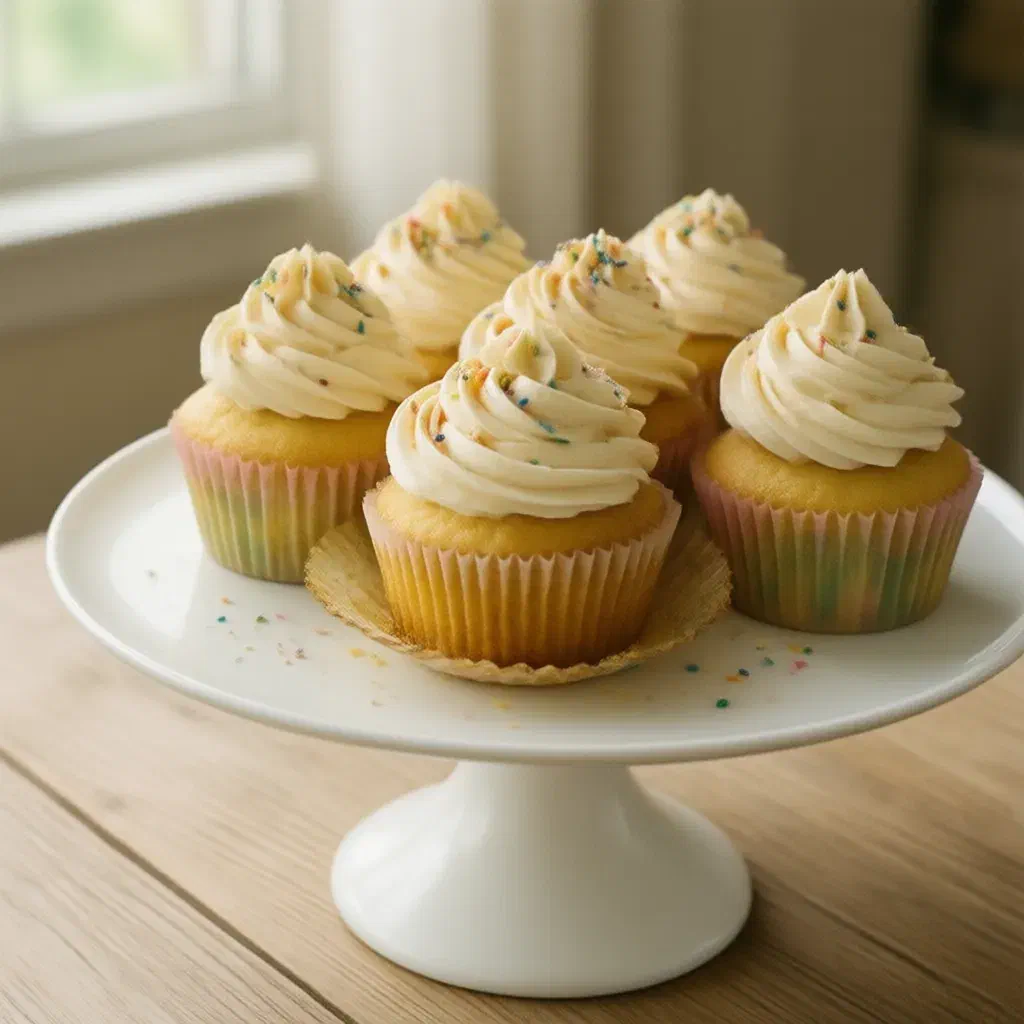
A muffin with a dollop of cream on top is not yet a cupcake. American cupcakes have a fine, sweet sponge and are crowned with a buttercream that stands almost as tall as the cake itself. This recipe makes six, exactly half a muffin tin. Including cooling time, you will be done in a little over an hour.
About Cupcakes
Cupcakes are small sponge cakes baked in paper cases and decorated with frosting afterwards. In the USA they belong at children’s birthday parties, school fêtes and bake sales, where parents sell cakes for a good cause. The batter is paler and more tender than a muffin batter, because the butter and sugar are creamed for a long time. The classic vanilla frosting is made from butter and icing sugar and tastes sweet accordingly. If you prefer something darker, go for the chocolate version or red velvet, whose big brother, the Red Velvet Cake, also features here. The little cakes are popular in South America too, for example as Cupcakes de Vainilla from Uruguay.
Ingredients (serves 1–2)
- 60 g soft butter
- 60 g sugar
- 1 egg (medium), at room temperature
- 90 g plain wheat flour (type 405)
- 1/2 tsp baking powder
- 1 pinch of salt
- 50 ml milk, at room temperature
- 1/2 tsp vanilla extract
- 60 g soft butter for the frosting
- 120 g icing sugar
- 1 tbsp milk or cream for the frosting
- 1/4 tsp vanilla extract for the frosting
- 1 tsp coloured sugar sprinkles to decorate
- 6 paper baking cases
Shopping for the ingredients
You will find all the ingredients in any supermarket. When buying vanilla extract, make sure it is real extract made from vanilla pods. Vanilla flavouring or vanillin sugar tastes more artificial, which is especially noticeable in the frosting. For the buttercream, use sweet cream butter with 82 % fat. Reduced-fat spread makes the frosting soft and runny. Paper cases come in two sizes. For this recipe you need the standard muffin cases with a base of about 5 cm, not the small petit four cases. Sturdy cases made of coated paper stand up even without a tin and look neater on the tea table.
Preparing the dish
Take the butter, egg and milk out of the fridge an hour before baking. Cold ingredients do not combine well, the batter curdles and the cupcakes turn out firm. Preheat the oven to 175 °C top and bottom heat. Place the paper cases in a muffin tin. Weigh out the flour, baking powder and salt and mix them in a small bowl. For a full tray of 12, simply double all the quantities; the baking time stays the same.
Step-by-step instructions
- Beat 60 g soft butter with 60 g sugar using a hand mixer on the highest setting for 3 to 4 minutes, until the mixture is pale and creamy.
- Add the egg and 1/2 tsp vanilla extract and beat for another minute, until everything is smooth.
- On a low setting, stir in the flour mixture alternately with 50 ml milk in two portions, only until no flour is visible.
- Using two teaspoons, divide the batter between the 6 cases, filling each about two thirds full.
- Bake the cupcakes on the middle shelf for 18 to 20 minutes. A wooden skewer inserted into the centre must come out clean.
- Leave the cupcakes to rest in the tin for 5 minutes, then lift them out and let them cool completely on a wire rack, about 30 minutes.
- For the frosting, beat 60 g butter for 2 minutes until creamy, sift in 120 g icing sugar and keep beating with 1 tbsp milk and 1/4 tsp vanilla extract for 3 minutes, until the cream is light and fluffy.
- Spoon the frosting into a piping bag with a star nozzle and pipe it in a spiral from the outside in onto the cold cupcakes. Finish with a scattering of sugar sprinkles.
Gluten-free / lactose-free version
For gluten-free cupcakes, replace the 90 g wheat flour with a gluten-free flour blend for sponge cakes, for example from Schär or Seitz. Add 1 tbsp more milk, as these blends absorb more liquid. Baking powder is usually gluten-free, but check the packet anyway. The recipe becomes lactose-free with lactose-free butter and lactose-free milk, both of which are now available in almost every supermarket. The method stays exactly the same.
Tips for vegans and vegetarians
Cupcakes are already vegetarian, as long as the sugar sprinkles contain no gelatine or shellac. For the vegan version, replace the butter in the batter with 50 g plant-based block margarine and the egg with 50 g unsweetened apple purée plus an extra 1/4 tsp baking powder. Use oat or soya drink instead of cow’s milk. The frosting works with block margarine; soft spreadable margarine from a tub becomes too runny.
More tips and tricks
The most common mistake is putting frosting on warm cupcakes. The butter melts straight away and the topping slides off the side. Wait until the cakes are completely cold. Mix the batter only briefly once the flour is in, otherwise the gluten develops and the cupcakes become tough and full of holes. If the paper cases come away after baking, the batter was too moist or the cupcakes sat warm in the tin for too long. Once decorated, they keep in a tin in the fridge for 3 days. Take them out half an hour before eating, as cold buttercream has little flavour.
Adapting the recipe to your taste
For chocolate cupcakes, replace 15 g of the flour with 15 g cocoa powder and stir 1 tbsp cocoa into the frosting. Lemon cupcakes get the zest of half an unwaxed lemon in the batter and 1 tsp lemon juice instead of milk in the frosting. If you would like less sweetness, make a cream cheese frosting from 50 g full-fat cream cheese, 30 g butter and 60 g icing sugar. A few fresh raspberries pressed into the batter give a fruity centre.
Ingredient substitutions
Instead of plain wheat flour (type 405), you can use spelt flour (type 630); the cupcakes will be a little firmer. You can swap the sugar in the batter for light cane sugar, which has a slight caramel taste. Buttermilk instead of milk makes the batter moister; in that case stir in a pinch of bicarbonate of soda. If you have no vanilla extract, scrape out the seeds of half a vanilla pod. For the frosting, part of the icing sugar can be replaced with unsweetened strawberry powder, which adds colour without artificial dyes.
Drink pairing ideas
Sweet cupcakes go well with a strong filter coffee or an Americano. In the USA, children usually drink cold milk with them, and it really does soften the sweetness of the frosting. If you want something refreshing, try a homemade lemonade with little sugar. In summer, an unsweetened iced tea made from black tea with lemon slices also works well.
Serving and presentation ideas
Arrange the cupcakes on a tiered cake stand or a simple wooden board. At a birthday party they look better lined up in rows than jumbled on a plate. A coloured case under a white topping looks fresh, while gold or brown cases suit chocolate cupcakes. Add the decorations only just before serving, otherwise coloured sprinkles bleed into the buttercream.
A bit of history
Small cakes baked in cups were already described by Amelia Simmons in her book American Cookery of 1796, the first cookbook by an American author printed in the USA. The term “cup cake” appears in 1828 in the recipes of Eliza Leslie. Where the name comes from is not entirely clear. It may refer to the cups used as baking moulds or to the cup as a unit of measurement, since many early recipes measured flour, sugar and butter in cups. The modern form with a tall frosting topping became popular from around 2000 through New York bakeries and television, and spread from there to Europe.
More recipe ideas
Looking for even more ideas? Discover more recipes from the USA.
Summary: Cupcakes
For six cupcakes you need a sponge batter made with room-temperature ingredients, 18 to 20 minutes at 175 °C and patience while they cool. The buttercream goes only onto cold cakes. Follow that and you will get moist little cakes with a stable topping that keep well for three days in the fridge.