National Dish Yemen: Chicken Mandi (Recipe)
In this article
Discover Chicken Mandi, one of Yemen’s most treasured dishes. Tender chicken, warming spices and fragrant basmati rice come together for a meal that is as comforting as it is aromatic. Traditionally cooked over glowing charcoal, it carries a gentle, smoky depth that speaks of Yemeni hospitality. Bring this celebrated classic to your own table and enjoy a true taste of Arabia at home.
About Chicken Mandi
Chicken Mandi is a traditional Yemeni dish that unites flavour, aroma and culture in every bite. This wonderful rice dish is built around tender chicken, fragrant spices and perfumed basmati rice. It is traditionally prepared in a charcoal oven, which lends the food its distinctive, smoky character. Chicken Mandi is a feast for the palate and a testament to Yemeni hospitality and heritage, making it a proud centrepiece of any gathering.
Ingredients (serves 1–2)
- 200 g basmati rice
- 400 g chicken (thighs work well)
- 2 onions
- 4 cloves of garlic
- 1 tsp cumin
- 1 tsp cinnamon
- 1 tsp turmeric
- Salt and pepper to taste
- 2 tbsp ghee or vegetable oil
- 600 ml water
Shopping for the ingredients
To make Chicken Mandi, it is best to work with fresh ingredients. Visit your local market or a Middle Eastern grocery to find the finest spices and the freshest basmati rice. The quality of the ingredients plays a decisive role in the flavour of the dish, so choose them with care. Pre-seasoned chicken pieces can also make an interesting alternative if you fancy a little experimenting.
Preparing the dish
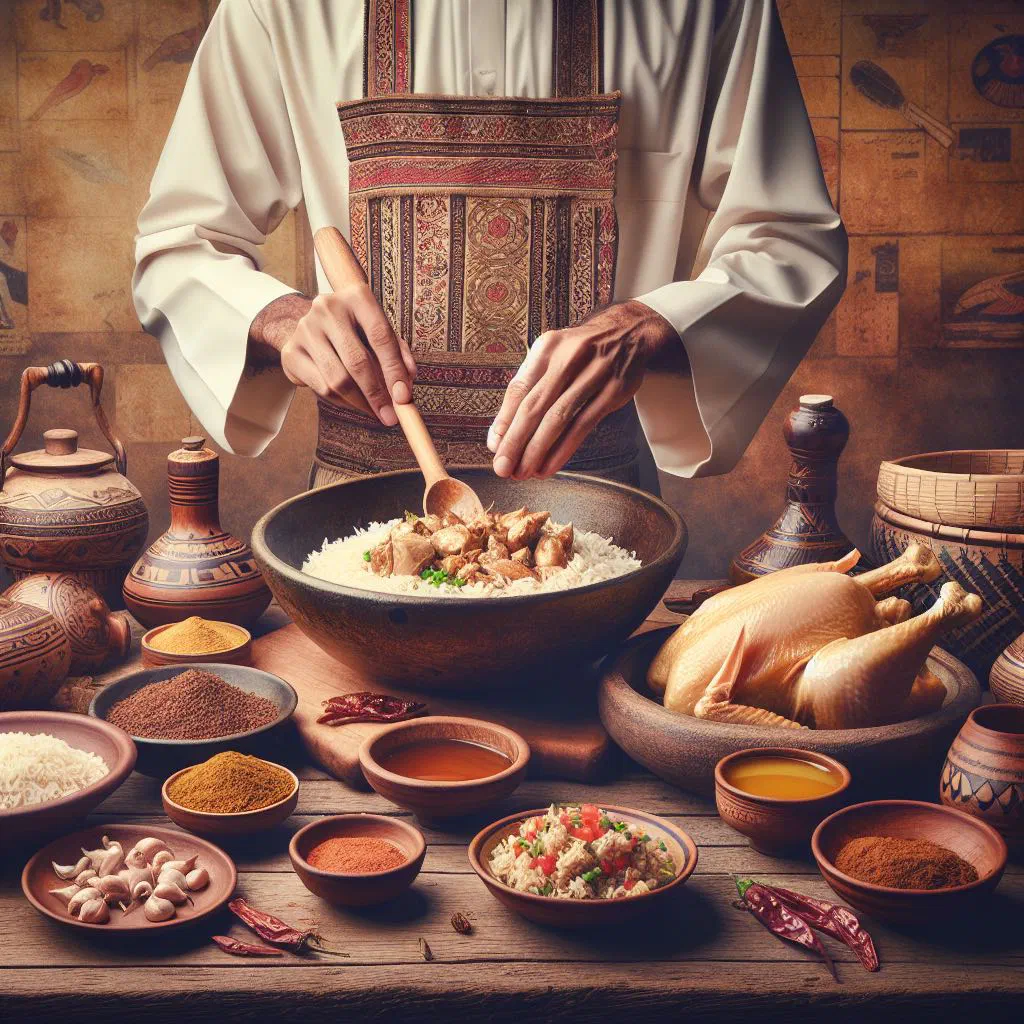
Begin by preparing the ingredients so the cooking runs smoothly from start to finish. The onions and garlic should be finely chopped, as they provide the foundation of the aromas. The chicken can be cut into pieces to ensure it cooks through evenly. Have all your spices measured out and within reach so you can add them at just the right moment.
Step-by-step instructions
- Heat the ghee or oil in a large pot and sauté the onions and garlic until golden brown.
- Add the chicken and brown it on all sides.
- Stir in the spices — cumin, cinnamon, turmeric, salt and pepper — and mix well.
- Pour in the water and let the chicken simmer gently for 30 minutes.
- Add the basmati rice and stir everything together. Cover the pot and let it cook over low heat until the rice is tender.
Gluten-free / lactose-free version
Chicken Mandi is naturally gluten-free and lactose-free, making it an excellent choice for anyone with those intolerances. Simply use the listed ingredients and make sure all your spices are certified gluten-free. Alternative fats or oils can be used if ghee is unavailable or best avoided.
Tips for vegans and vegetarians
For a vegan or vegetarian version of Mandi, you can replace the chicken with vegetables or pulses. Chickpeas, or vegetables such as carrots and peas, are superb alternatives that also soak up the aromas of the dish. Take care to adjust the cooking time so the vegetables turn out tender rather than mushy. Use vegetable stock in place of water to intensify the flavour even further.
More tips and tricks
To make Chicken Mandi even more delicious, feel free to add a few extra spices or ingredients that suit your personal taste. A pinch of saffron, for example, lends beautiful colour and a delicate aroma. It also helps to soak the rice in water beforehand so it cooks more evenly. Experiment with different textures and aromas to create your perfect version of the dish. For more ideas, explore the wider world of Yemeni cuisine.
Adapting the recipe to your taste
Tailoring the dish to your own preferences is the key to a truly great result. Try different combinations of spices to discover which blends you enjoy most. If you like a bit of heat, add fresh or dried chillies. You can also adjust the amount of salt and pepper to keep full control over the seasoning, much as you would with a comforting Yemeni Chicken Stew.
Ingredient substitutions
If some of the traditional ingredients are not to your liking, there are plenty of alternatives. Instead of ghee, you can use coconut oil or olive oil. Basmati rice can be swapped for other rice varieties, though be sure they have a similar cooking time. You can also vary the spices according to what you have available, while keeping the essence of the dish intact, a flexibility it shares with a hearty Madfoon.
Drink pairing ideas
To accompany the meal, you can choose from a range of drinks typical of Yemeni cooking. Mint tea or freshly pressed pomegranate juice are refreshing options that pair beautifully with Chicken Mandi. Aim for something light, as the main dish already carries plenty of flavour.
Serving and presentation ideas
The presentation of Chicken Mandi can enrich the whole meal. Serve the dish in a large bowl or platter to create a warm, inviting atmosphere. Scatter fresh herbs such as coriander or mint over the top to make it visually appealing. You can also add some fried nuts or raisins for a lovely contrast in texture. A basket of warm Malawah alongside makes the spread even more generous.
A bit of history
Chicken Mandi holds deep cultural significance in Yemen and is often served on special occasions. The roots of this dish lie in Bedouin culture, where it was traditionally prepared for celebrations and weddings. Today Mandi is cherished across many other Arab countries and is growing ever more popular in the Western world too. It reflects the rich food culture of Yemen and offers a delicious way to get to know it, sitting proudly alongside classics such as Mandi.
More recipe ideas
Summary: Chicken Mandi
Chicken Mandi is a unique dish that offers you a genuine taste of Yemen. With its blend of aromas, spices and soulful preparation, you will enjoy a delicious meal and experience a piece of the country’s rich culture in your own kitchen. Whether for a special occasion or a simple family dinner, this recipe is sure to bring joy and satisfaction to the table.