National Dish Yemen: Sabiha (Recipe)
In this article
Meet Sabiha, a soulful Yemeni dish that turns tender lamb or beef into a fragrant, slow-braised feast. Layered with warm oriental spices and finished with a scattering of fresh herbs, it is the kind of food that draws people together around one table. Long treasured as a symbol of Yemeni hospitality, Sabiha appears at celebrations and everyday gatherings alike, and it brings the warmth of an Arabian kitchen straight into your home.
About Sabiha
The dish Sabiha is a genuine feast for the senses, offering a harmonious pairing of tender lamb or beef and a whole medley of oriental spices. The spices you choose are decisive for its signature flavour, lending the dish a special character all its own. Sabiha is widely enjoyed across Yemeni culture and is often a favourite feature at celebratory occasions. More than that, it is a mark of hospitality, frequently shared in convivial company.
Ingredients (serves 1–2)
- 400 g lamb or beef
- 2 onions, roughly chopped
- 3 cloves garlic, finely chopped
- 2 tablespoons olive oil
- 1 teaspoon cumin
- 1 teaspoon coriander
- Salt and pepper, to taste
- Fresh herbs (such as parsley or coriander), to garnish
- Fragrant bread, to serve
- Salad of your choice
Shopping for the ingredients
To prepare Sabiha, it is important to choose fresh, good-quality ingredients. Visit your local market or a specialist shop to find high-quality meat. Spices such as cumin and coriander are best bought from a dedicated spice merchant to guarantee the freshest quality. Remember to pick up fresh herbs too, as they can improve the flavour of the dish considerably.
Preparing the dish
Before you begin cooking Sabiha, get all your ingredients ready. Cut the meat into bite-sized pieces and marinate it with the spices along with the garlic and olive oil. Leave it to rest for a while so the aromas can work their way deep into the meat. Meanwhile, prepare the onions, which will play an important role in the dish a little later on.
Step-by-step instructions
- Sear the marinated meat in a large pot over medium heat until it takes on a good, even browning.
- Add the onions and continue to cook until they turn translucent.
- Pour in a little water to create a light broth, then cover the meat.
- Let the dish simmer over low heat until the meat is tender (about 1–1.5 hours).
- Garnish with fresh herbs and serve alongside salad and bread.
Gluten-free / lactose-free version
The dish Sabiha is naturally gluten-free and lactose-free, as it contains no wheat products or dairy. To make sure your meal is easy to digest, take care to select your ingredients carefully. Use gluten-free bread as a side if you are sensitive to gluten.
Tips for vegans and vegetarians
For a vegan or vegetarian version of Sabiha, you can replace the meat with a variety of vegetables. A combination of chickpeas, aubergine and courgette, for instance, makes a tasty and nourishing alternative. These ingredients can be marinated in the same spice mix to achieve a similarly rich aroma. Here too, fresh herbs are a wonderful way to deepen the flavour further.
More tips and tricks
To get the very best from your Sabiha, it helps to prepare the dish in advance. The flavours intensify with the time the dish is given to rest and mingle. Bear in mind that cooking in a braising pot is a superb way to achieve wonderfully tender meat. Experiment with different spice blends too, to create a flavour that is truly your own.
Adapting the recipe to your taste
One of the great qualities of Sabiha is how flexible the recipe is. Feel free to adjust the spices or the main ingredient to suit your taste. You might use more or less of certain spices, for example, to vary the heat or the overall flavour. This way you can tailor the dish perfectly to your own preferences and those of your guests.
Ingredient substitutions
If you have trouble finding some of the ingredients for Sabiha, there are excellent alternatives to hand. Instead of lamb or beef you can use poultry, which makes the dish a little lighter, much as chicken does in a comforting Yemeni Chicken Stew. For the spices, you can use equivalent blends that offer similar aromas. That way the authentic character of the dish is preserved, even if you tweak the recipe slightly.
Drink pairing ideas
A range of drinks suits a hearty dish like Sabiha, each one underlining its flavours. A well-chilled, dry white wine or a fruity red complements the meal beautifully. A refreshing mint tea is also a popular choice and pairs superbly with the dish’s spiced notes. Alternatively, non-alcoholic options such as Arabic lemonade or water with lemon do the job nicely.
Serving and presentation ideas
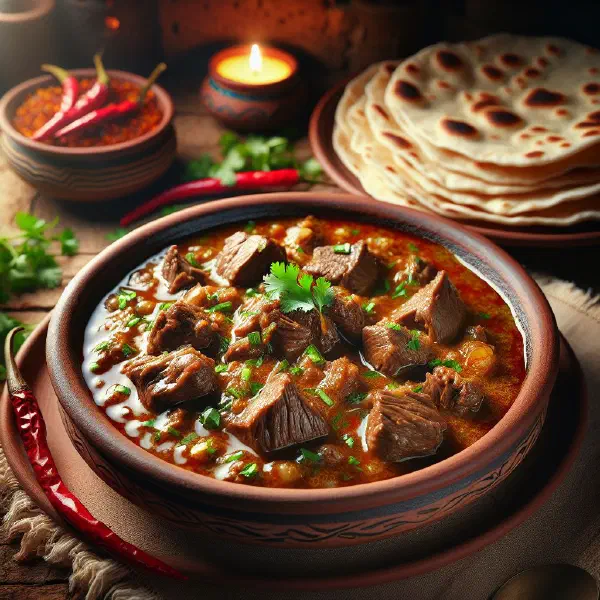
The presentation of Sabiha can play an important part in the whole meal. Serve the dish in a rustic bowl and garnish it generously with fresh herbs to add colour and freshness. Make sure to arrange the fragrant bread and salad attractively to create an inviting table. A good look heightens the entire experience and turns the meal into even more of a celebration.
A bit of history
Sabiha has a rich cultural history in Yemen and is a traditional dish often served on special occasions. It reflects the distinctive habits of Yemeni cuisine, which places great emphasis on spices and fresh ingredients. In many families it has been prepared for generations, with each recipe holding its own secret ingredient or technique. By making this dish, you take part in that tradition and experience the true food culture of Yemen, a tradition it shares with the hearty Saltah and the fragrant Mandi.
More recipe ideas
Summary: Sabiha
The traditional dish Sabiha offers a spectacular blend of flavours that can be enjoyed on its own or as part of a convivial gathering. As a highlight of Yemeni cuisine, it brings family and friends together and creates an atmosphere of warm hospitality. Make the most of the recipe’s many possibilities for adaptation, tailoring it to your own tastes and creating new flavour experiences. Give it a try yourself and let the aromas of Yemen win you over.