National Dish Zimbabwe: Muto Wemichero (Recipe)

In this article
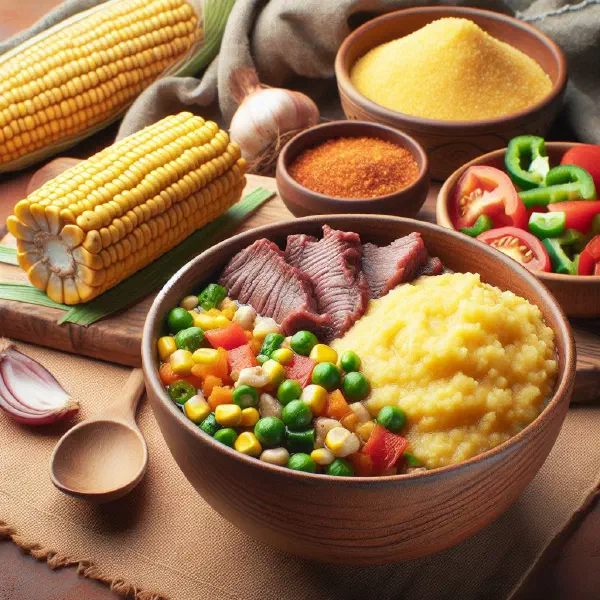
Discover Muto Wemichero, a warming Zimbabwean stew built on the country’s most trusted staple: maize meal. Thickened until it turns rich and spoonable, then folded through with whatever vegetables the season offers, it is the sort of dish that feeds a family without fuss. A handful of spices, a good stir and twenty minutes at the stove are all it takes to bring a little of Zimbabwe to your own table.
About Muto Wemichero
Muto wemichero is a much-loved dish from Zimbabwe that wins people over with its flavour and its refreshingly simple preparation. It is essentially a stew made on a base of maize meal, flexible enough to take on all sorts of ingredients depending on what is to hand. The dish reflects the country’s rich culture and long-standing culinary traditions, where filling, nourishing meals are shared rather than plated individually. If you are looking for something authentic and genuinely satisfying, this is a fine place to start.
Ingredients (serves 1–2)
- 1 cup maize meal
- 4 cups water
- 1 teaspoon salt
- 1 cup vegetables (carrots, peppers or spinach, for example)
- Optional: spices of your choice (pepper, garlic)
Shopping for the ingredients
For muto wemichero you want fresh produce above all. Maize meal is usually stocked in African and Asian grocery shops, and increasingly in larger supermarkets too. Pick up your vegetables at a market or greengrocer where you can judge them by eye. Quality tells here more than in most recipes, with so few ingredients, each one carries real weight in the finished dish.
Preparing the dish
Getting ready for muto wemichero could hardly be simpler. Weigh out the ingredients and set them within reach so you are not scrambling once the pan is hot. Chop the vegetables to whatever size you like, smaller pieces soften faster and distribute more evenly through the stew. If you are short of time, pre-cooked or leftover vegetables work perfectly well and cut the process down considerably.
Step-by-step instructions
- Bring the water to the boil in a large pan and add the salt.
- Sprinkle in the maize meal slowly, stirring constantly so no lumps form.
- Lower the heat and let it cook for around 10 minutes, until it thickens.
- Add the prepared vegetables and mix everything through thoroughly. Season with spices to taste.
- Let the stew simmer for a few more minutes, then serve warm.
Gluten-free / lactose-free version
Muto wemichero is naturally gluten-free and lactose-free with almost no effort. Maize meal contains no gluten to begin with, so simply take care that nothing gluten-containing sneaks in alongside it, and the stew stays gentle on the stomach. If you would like a creamier consistency, a splash of plant-based milk does the job without introducing lactose. That keeps the dish open to a wide range of dietary needs.
Tips for vegans and vegetarians
This stew suits vegans and vegetarians beautifully, since the vegetables are entirely your choice. In place of meat or animal products, stir in beans or lentils to make the dish more substantial and boost the protein. That flexibility is what makes it such a reliable everyday meal. Spices do plenty of heavy lifting on the flavour front too, so nothing is lost by leaving animal products out, much as in a hearty Wild Mushroom Stew.
More tips and tricks
There is real room to play with muto wemichero. Vary the vegetables according to the season or simply to your own liking. Want to give the dish a bit more character? Try different spice combinations and see where they take you. Swapping the water for vegetable stock is another easy win. It deepens the aroma noticeably and costs you nothing in effort.
Adapting the recipe to your taste
The beauty of muto wemichero lies in how forgiving it is. Use less water for a thicker, firmer result, or pile in extra vegetables for something lighter and fresher. It is also a superb way to use up odds and ends from the fridge before they go to waste. Experiment with different additions until you land on a version that is unmistakably yours.
Ingredient substitutions
If the standard ingredients do not appeal, or simply are not in the cupboard, there are plenty of alternatives. The maize meal can be replaced with a blend of other gluten-free flours, though the texture will shift a little. Vegetables can be swapped freely according to season and availability, pumpkin works particularly well, as it does in Pumpkin And Corn Stew. Frozen vegetables are a perfectly good stand-in when fresh ones are out of reach.
Drink pairing ideas
All sorts of drinks sit well with muto wemichero. A cooling hibiscus infusion is easy to make and complements the earthy flavours neatly. Plain water with a squeeze of lemon does the job just as well, as does a fruit-forward African-style lemonade. Herbal teas are worth exploring too, a Zimbabwean Herb Infused Tea rounds off the meal nicely.
Serving and presentation ideas
A few small touches lift muto wemichero considerably. Serve it in brightly coloured bowls to play up the vegetables, and finish with fresh herbs or a wedge of lime. Little side dishes of relish or sauce set alongside the main bowl make the meal feel more generous and give everyone something to reach for. Presentation costs nothing and changes the whole experience.
A bit of history
The origins of muto wemichero reach far back into Zimbabwe’s past. It has long been cooked in ordinary households and is a quiet symbol of connection to the land and its culture. The stew carries the traditions of several ethnic groups whose culinary influences have merged over generations, and it sits comfortably within the wider world of Zimbabwean cuisine. In rural areas especially it is still made in large quantities and shared with family or the wider community.
More recipe ideas
Summary: Muto Wemichero
Muto wemichero is a delicious, straightforward dish from Zimbabwe that adapts readily to almost any way of eating. With so many ways to vary it and so little standing between you and a finished pan, it suits confident cooks and beginners alike. The flavours will win them round. Give it a go and taste a little of Zimbabwe’s rich culinary heritage for yourself.