National Dish Zimbabwe: Sadza (Recipe)
In this article
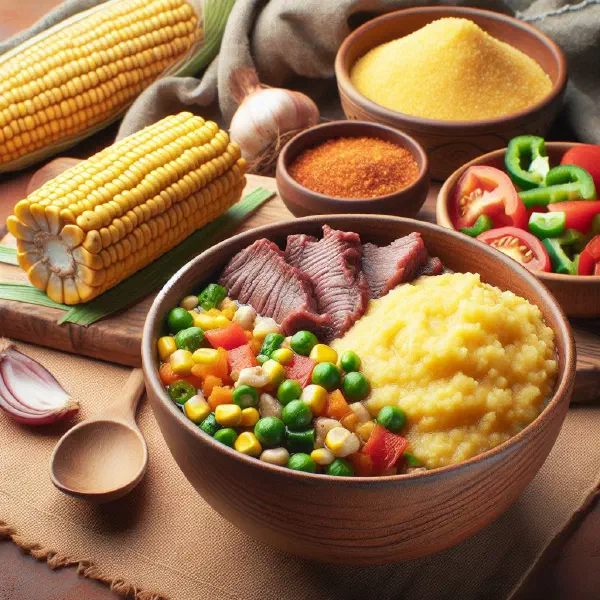
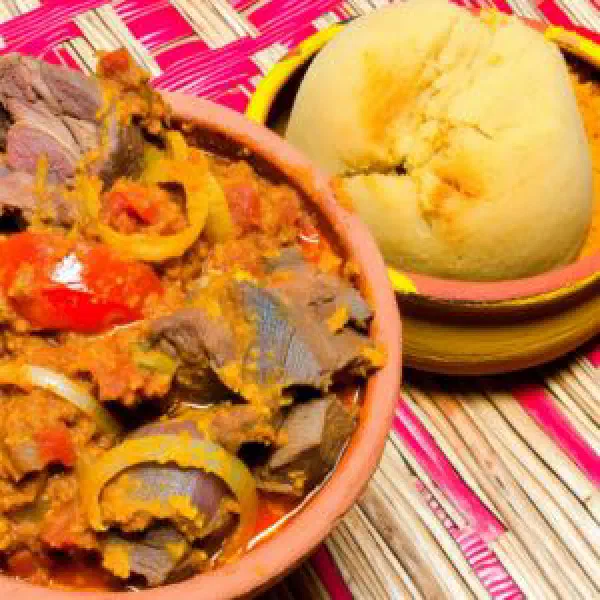
Sadza is Zimbabwe’s maize staple, the same dish as nshima and ugali under a different name. It is eaten with the right hand, with a relish beside it, and the phrase sadza ne nyama, sadza with meat, describes a proper meal.
About Sadza
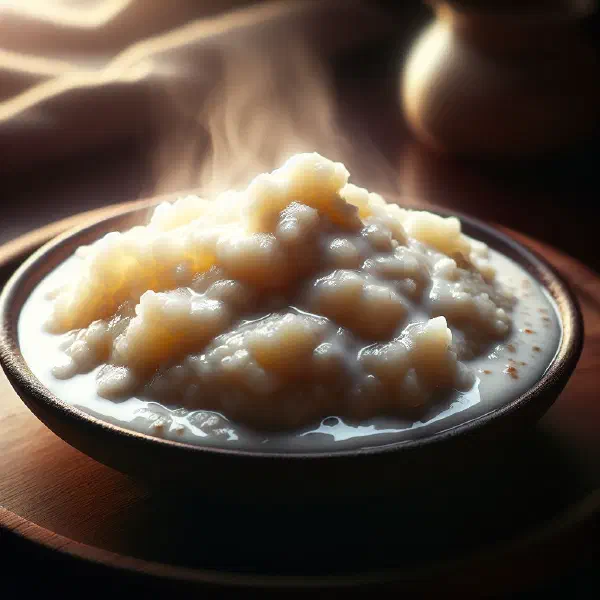
Two stages, as everywhere this dish is made. A thin porridge, bota, cooks first, then the rest of the flour goes in and is worked hard until the mass is smooth and stiff.
Millet sadza, sadza rezviyo, is the older version, darker and more nutritious, and it is coming back into favour as drought makes maize less reliable.
Ingredients (serves 1–2)
- 1 cup fine maize meal (white cornmeal)
- 2 cups water
- A pinch of salt (optional)
Shopping for the ingredients
White maize meal, sold as mealie meal or hupfu, fine grind, from an African grocer. For sadza rezviyo you want finger millet flour, which the same shops carry.
Preparing the dish
A heavy pot and a wooden spoon. The stirring in the second stage takes real effort, and that work is what develops the smooth texture. Do not rush the cooking time.
Step-by-step instructions
- Bring the water to the boil in a large pan.
- Whisk in a small amount of the maize meal to make a thin porridge.
- Reduce the heat and let it simmer for about five minutes.
- Add the remaining maize meal slowly, stirring continuously to avoid lumps.
- Stir firmly until the mixture thickens and pulls away from the sides of the pan.
- Cook a further 10 minutes so the maize is fully done, pressing it against the pot.
- Let it cool slightly, then shape into portions with wet hands or a wet spoon.
Gluten-free / lactose-free version
Maize and millet contain no gluten and sadza contains no dairy. It is naturally suitable for both restrictions.
Tips for vegans and vegetarians
Sadza is flour and water. Muriwo unedovi, greens in peanut butter, muboora, pumpkin leaves, nhopi, pumpkin mash, and tomato and onion relish are all vegan and all standard relishes.
More tips and tricks
Give the bota stage its five minutes, since that is what cooks out the raw flour taste. Stir hard in the second stage. And wet your hands before shaping, or it sticks to everything.
Adapting the recipe to your taste
Millet sadza and sadza rezviyo are the traditional grains. A softer version is breakfast porridge. Sadza ne nyama with beef is the full meal.
Ingredient substitutions
Finger millet, sorghum or cassava flour. Polenta is coarser but works. Water only.
Drink pairing ideas
Zimbabwean herb-infused tea, often makoni or zumbani. Maheu, the fermented maize drink. Water with the meal.
Serving and presentation ideas
Serve smooth mounds on a shared plate with relish beside. Hands are washed at the table first. Pinch off a piece, roll it in the palm, press a hollow with the thumb and scoop.
A bit of history
Finger millet was the Shona staple for centuries and maize displaced it during the colonial period. Zimbabwe’s droughts have pushed millet back into policy discussions and into some kitchens, since it needs far less water. Sadza anchors Zimbabwean cuisine and appears at every meal.
More recipe ideas
Summary: Sadza
Sadza is maize meal cooked stiff in water and shaped into portions, served with a relish. Cook the thin porridge first, stir hard, and wet your hands before shaping.